
THE HIDDEN WORLD BEHIND OUR SMARTPHONE: RESOURCES, PEOPLE AND THE POWER OF REPAIR
- Posted on
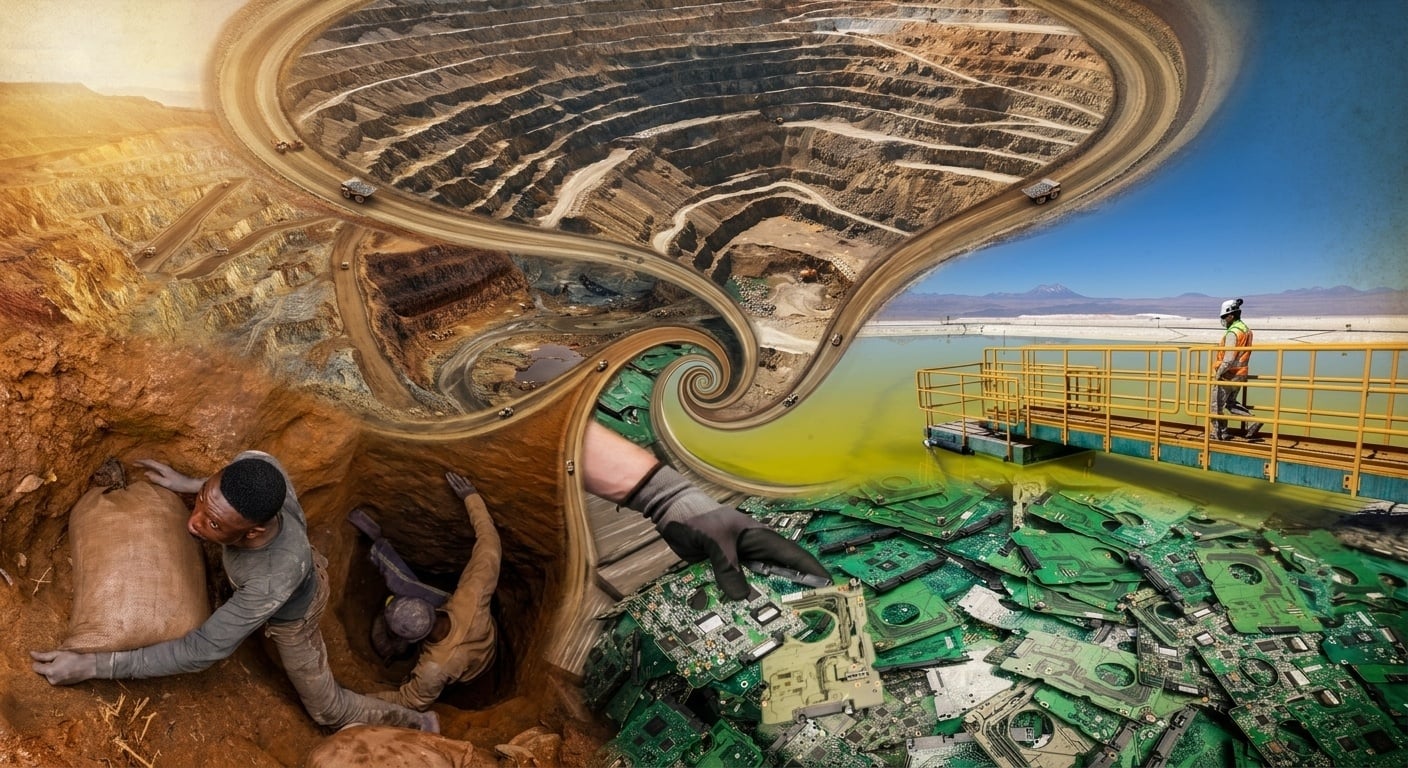
We use our smartphones every day. To communicate, work, take photos and stay connected to the world. But do we ever stop to think about what it takes to manufacture a single smartphone? Behind the screen, battery and electronic components lies a global supply chain involving raw materials, mining, manufacturing and transportation. A smartphone consists of hundreds of parts and contains a wide variety of metals and minerals. Each material serves a specific purpose and contributes to the technology we use every day.
At MTimpex, we believe these valuable raw materials and products deserve to be used for as long as possible. That is why we want to promote repair and refurbishment and contribute to a future in which smartphones last longer.
- Hundreds of components in a single smartphone
A smartphone is a technologically advanced product in which hundreds of parts and electronic components work together. These include the display, battery, cameras, speakers, microphones, antennas, circuit boards, chips, sensors, connectors and countless smaller components.
- What raw materials are found in a smartphone?
A smartphone contains much more than just plastic and glass. Various metals and minerals are essential to the operation of modern electronics.
|
Raw material |
What is it used for? |
|
Copper |
Electrical connections and wiring |
|
Gold |
Small electrical contacts |
|
Silver |
Electronic components |
|
Cobalt |
Used in certain types of batteries |
|
Lithium |
Rechargeable batteries |
|
Graphite |
Battery electrodes |
|
Tin |
Solder joints on circuit boards |
|
Tungsten |
Used in, among other things, the vibration mechanism |
|
Rare earth elements |
Magnets in speakers and vibration motors |
|
Silicon |
Chips and electronic components |
|
Aluminium |
Housing and internal components |
|
Plastics |
Housing, insulation and other components |
The exact composition varies by model. Some materials are present in very small quantities but are still important to the device's operation.
The United States Geological Survey (USGS) explains how a wide range of minerals and elements make the technology behind our smartphones possible.
Source: USGS — Ordinary Minerals Give Smartphones Extraordinary Capabilities.
- Where do these raw materials come from?
The materials used in a smartphone come from different parts of the world. They are mined, processed and brought together through international supply chains to create a single device.
Democratic Republic of the Congo: cobalt
The Democratic Republic of the Congo is a major producer of cobalt. This metal is used, among other applications, in smartphone batteries. Concerns about working conditions, safety and child labour exist in parts of the mining sector. Conditions vary between mines and supply chains. This highlights the importance of responsible sourcing and paying attention to the people behind our technology.
Chile: lithium
Chile is a major producer of lithium. Some lithium is extracted from brine in salt flats, including in the Atacama Desert. Lithium is an important raw material for rechargeable batteries. Its extraction requires careful consideration of water use and potential impacts on local ecosystems and communities.
The rest of the world: copper, gold and other metals
Copper, gold, tin and other metals are mined and processed in countries around the world. As a result, the global smartphone supply chain depends on raw materials, energy, transportation and labour from many different regions.
Recycling: putting raw materials to use again
Discarded electronics also contain valuable materials. Specialised recycling companies can recover various metals and make them available to industry again. Not all materials are equally easy to recover. That is why it is important not only to recycle products responsibly but also to keep them usable for as long as possible.
- What happens when we replace a smartphone too early?
Manufacturing a new smartphone requires raw materials, energy, water and transportation. When a device is replaced prematurely despite still being repairable, some of the value invested in that product is lost. This does not mean that every repair is automatically better than every replacement. The condition of the device, the parts required, energy consumption and the quality of the repair all play a role. However, when a smartphone can continue to be used for years after a proper repair, this offers a practical way to avoid unnecessary replacement. By using products for longer, we can help reduce demand for new devices and preserve the value of existing materials for longer. The most sustainable choice often begins with one question: can this product be given a second life?
- Repair and refurbishment: turning defects into new opportunities
Repair and refurbishment play an important role in a circular smartphone supply chain. Repair involves fixing a faulty device, for example by replacing the screen, battery or connector. Refurbishment involves inspecting used devices or components, repairing them where necessary and testing them again to make them suitable for reuse. LCD refurbishment also offers opportunities. With professional equipment, certain damaged screens can be restored and reused instead of being discarded immediately. This requires the right machinery, high-quality parts, technical expertise and a reliable quality-control process. For professional repair businesses and refurbishers, this creates opportunities to expand their services, develop new revenue streams and extract more value from used products. For MTimpex, this is an important reason to continue developing our range of repair and refurbishment solutions.
- Europe is encouraging repair
The European Union is also taking steps to keep products usable for longer. The European Right to Repair Directive, Directive (EU) 2024/1799, has applied since 31 July 2026. It promotes the repair of products covered by the relevant European product regulations, including mobile phones. In addition, specific European ecodesign requirements for smartphones and tablets have applied since 20 June 2025. These requirements address, among other things, repairability, the availability of certain spare parts, battery durability and software support. For smartphones, for example, requirements cover the availability of certain spare parts for several years and access for professional repairers to the necessary software or firmware. These developments show that repair and longer product lifespans are becoming increasingly important in the European market. This is a significant development for MTimpex. We want to support wholesalers and professional repairers with the parts, tools and equipment needed to keep smartphones in use for longer.
Sources:
European Commission — Right to Repair: New consumer rights for easy and attractive repairs
European Commission — Smartphones and Tablets
- MTimpex: nearly 30 years of experience, ready for the next step
For nearly 30 years, we have supported wholesalers and professional repairers with smartphone parts, accessories, tools and repair solutions. MTimpex is the largest supplier of smartphone displays and parts in Europe and Asia. With approximately 40,000 SKUs, an international network and our own quality control team in China, we have built a strong foundation in product range, quality and service. Our ambition is to build on that foundation. We want to do more than supply parts: we also want to support our customers with professional repair machines, refurbishment equipment and solutions that enable more smartphones and components to be repaired and reused. Quality remains central to everything we do. Through careful product selection and quality control, we aim to provide our partners with products and solutions they can rely on. We see our customers not just as buyers, but as partners. Together, we can develop new opportunities for repair, refurbishment and extending the useful life of smartphones.
- Our vision: a circular future for smartphones
We believe in a world where smartphones are not discarded unnecessarily but remain in use for as long as possible. A world where repair and refurbishment are natural choices and technology does not come at the expense of people, the environment or natural resources. MTimpex aims to contribute to a circular smartphone supply chain in which value is preserved, waste is reduced and every device gets the chance of a second life.
- Our mission: making repair possible
MTimpex makes professional smartphone repair more accessible by supporting repair businesses and refurbishers with high-quality parts, advanced repair and refurbishment equipment, technical expertise and reliable service. We help our partners repair more smartphones, reuse more components and extend the lifespan of devices. In this way, we combine entrepreneurship and innovation with responsibility towards people, the environment and natural resources.
Together, we give technology a second life
Behind every smartphone lies a world of raw materials, technology and people. By making more conscious use of the products we already have, we can preserve value and help reduce waste. Repair, refurbishment and recycling each play their own role. Together, they can contribute to a smartphone supply chain in which products last longer and raw materials are used more effectively. At MTimpex, we want to support this development with the products, expertise and solutions that professional repairers and wholesalers need. Because the future of technology is not only about what we can create, but also about what we can preserve.
MTimpex Your Repair Partner Crème de la crème, quality beyond every expectation.
Give your smartphone a second life.